Category

Insurance news

IAG puts Credit Suisse’s £1.5bn Greensill claim to bed – but insurance’s reckoning isn’t over

Carrier settles in case that involved UK ex-PM, London insurance broker
IAG puts Credit Suisse's £1.5bn Greensill claim to bed – but insurance’s reckoning isn't over

Australia’s biggest insurer has bought itself out of what was shaping up to be one of the most expensive trials in the country’s history. Late last week, Insurance Australia Group (IAG) agreed a confidential settlement with Credit Suisse over roughly A$3 billion (around £1.5 billion at current exchange rates) in claims tied to the 2021 collapse of supply chain finance firm Greensill Capital, according to the Australian Financial Review, which cited people close to the negotiations. The Federal Court in Sydney has since scrapped what was meant to be the opening day of hearings and replaced it with a short procedural mention instead.

It might read as a distant Australian courtroom matter, but the case sits at the centre of the Greensill saga that also dragged in a London insurance broker, a former UK prime minister, and a regulator that has spent four years working out who was asleep at the wheel so it’s relevant here.

Read next: UK agency seeks Lex Greensill’s director disqualification

Greensill Capital’s business model was straightforward on paper: buy up companies’ unpaid invoices at a discount, then package and sell that debt on to investors, banks and funds. Credit Suisse alone held around $10 billion of these packaged notes through its asset management arm. The whole structure depended on insurance, if the invoices went bad, credit cover was supposed to make good the loss.

That insurance came from Bond & Credit Co (BCC), a Sydney-based underwriting agency. IAG owned half of BCC until April 2019, when it sold its stake to Japan’s Tokio Marine.

Credit Suisse’s case argued that IAG remained liable for policies BCC allegedly wrote on its behalf, and specifically for the conduct of a former BCC underwriter, Greg Brereton, who Credit Suisse claimed had exceeded his authority when signing off cover for Greensill. IAG’s defence was the reverse: that Brereton and BCC had acted without proper authorisation, so liability couldn’t flow back to IAG at all.

UK insurance and credit professionals will know this shape of dispute well, even if the geography is unfamiliar – a coverage fight over who was actually underwriting what, on whose authority, and whether an agency had the power to bind the risk it claims to have placed.

Read next: Tokio Marine addresses speculation regarding Greensill exposure

It covers a business against the risk that a customer doesn’t pay an invoice through insolvency, protracted default, or political risk in cross-border trade. Lenders and financiers often require it before extending credit against unpaid invoices, which is exactly the arrangement Greensill relied on to package and sell its receivables. When BCC declined to renew Greensill’s cover in 2020, the whole financing structure lost its safety net and its main source of funding along with it.

A trial that had outgrown the courtroom

The case had turned into a genuine legal spectacle. At least seven law firms were instructed across the various parties, including Gilbert + Tobin for Credit Suisse and Allens for IAG, with written submissions reportedly running past 500 pages a side and senior counsel including Noel Hutley and Tony Bannon leading teams of barristers. The wider web of related Greensill litigation in the Federal Court runs to eleven interlinked proceedings covering IAG, BCC, Tokio Marine, global broker Marsh, Credit Suisse (now absorbed into UBS) and Greensill Bank’s administrators, with combined claims put at more than A$7 billion.

This latest deal follows an earlier settlement in May, when IAG resolved a roughly A$4 billion claim brought by Greensill Bank AG’s insolvency administrator. In its own filing to the Australian Securities Exchange at the time, IAG said that settlement “will not have a material impact on its financial position or FY26 financial results” and confirmed that the Credit Suisse and White Oak claims put at a combined A$3 billion plus interest “remain on foot” separately. White Oak’s case against IAG appears to still be live and unaffected by last week’s Credit Suisse deal, going by IAG’s own most recent public statement on the matter.

Analysts had been watching the numbers closely. In June, Macquarie estimated IAG’s net exposure to the Greensill litigation could run as high as A$740 million in a worst case, assuming Credit Suisse recovered only 30% of its claim and IAG’s professional indemnity cover held at around A$200 million. Separately, Greensill’s insurance broker Marsh disclosed in April that it carried roughly $425 million of liabilities linked to the litigation, with the possibility of more to come.

Read next: Insurer IAG settles one front of the Greensill legal war, but the hardest fight lies ahead

Why this still matters on this side of the world

Greensill was headquartered in London before it went bust, and its collapse triggered an uncomfortable episode in British public life. Former prime minister David Cameron worked as an adviser to the firm and lobbied government ministers on its behalf during the pandemic, which a Treasury Select Committee inquiry later found showed a serious lapse in judgement on his part.

The UK’s own Insolvency Service has separately pursued the man at the centre of it all. In June, founder Lex Greensill agreed to a nine-year ban from acting as a UK company director, avoiding a trial that had been due to start days later. “A nine-year ban is a significant period, above the average for director disqualifications and reflects the serious nature of Lex Greensill’s conduct,” said the Insolvency Service’s chief executive, Duncan Beach, in a statement at the time. A spokesperson for Greensill said the case had concluded “with no finding that Mr Greensill acted dishonestly or in bad faith.”

For the London market, the more instructive thread has always been the broking and underwriting failures the saga exposed. Marsh McLennan, which placed cover for Greensill, has already settled separate litigation brought against it, while Allianz’s Euler Hermes unit was drawn into related questions over fidelity cover it had written. The Greensill collapse remains a case study in what happens when trade credit insurance, invoice financing and asset management get layered on top of each other without anyone being entirely sure who is actually carrying the risk.

Read next: Credit Suisse set to face fallout from Greensill debacle

The bigger picture

Credit Suisse no longer exists as an independent bank. It was rescued and absorbed by UBS after its 2023 near-collapse, so it’s effectively UBS pursuing this claim and banking whatever the confidential settlement figure turns out to be. IAG shares closed largely flat on the news, having traded broadly sideways for most of the year before rallying over the past month, according to the Financial Review’s reporting.

With the Greensill Bank and Credit Suisse claims both resolved, IAG has removed two of its largest single liabilities of the past few years. But the settlements also mean the underlying legal question – how far an insurer’s liability stretches when an underwriting agency it once part-owned allegedly overstepped its authority  will likely never be tested in open court.

For insurers and brokers watching from London, that’s the frustrating part: a multi-billion-pound dispute over the basics of underwriting authority settled with no judgment left behind to guide the next one and, with White Oak’s claim still on foot, not necessarily the last word from this case either.
Source

As Dive In bows out, AI reshapes insurance’s talent challenge

After 12 years of Dive In, Aon and WTW inclusion leaders say AI is creating fresh questions around recruitment, bias and talent development

As Dive In bows out, AI reshapes insurance's talent challenge

Dive In’s final festival arrives at a moment when the insurance industry’s inclusion debate is shifting again, with artificial intelligence beginning to reshape how firms recruit, develop and retain talent.

For major brokers including Aon and WTW, the challenge is increasingly less about persuading leaders that workplace culture matters and more about ensuring new technology does not undo progress made over the past decade.

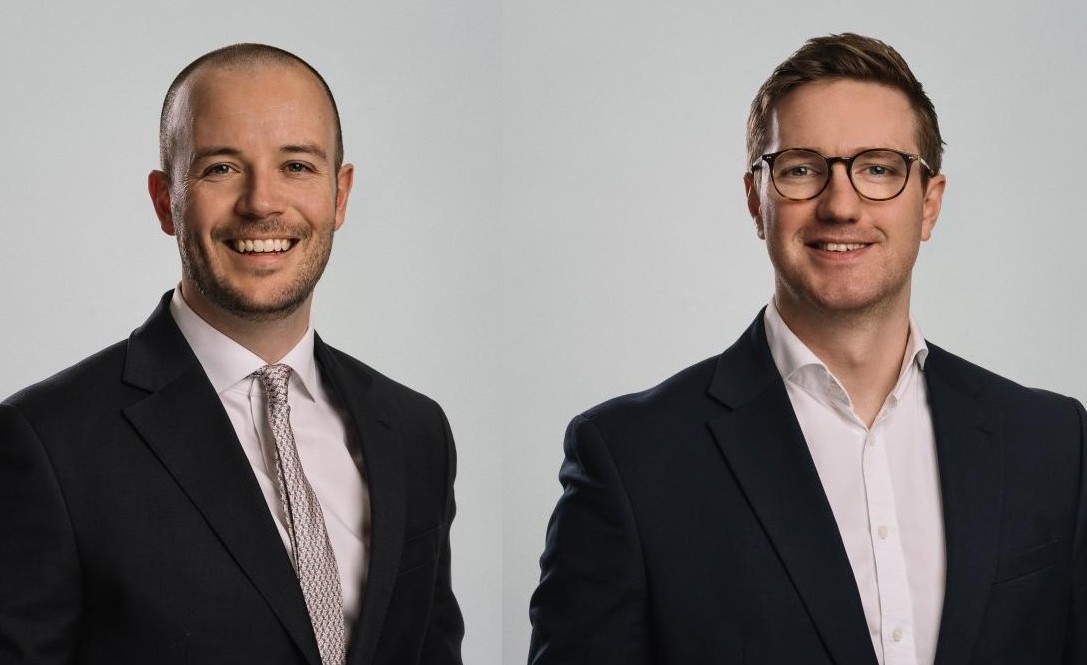
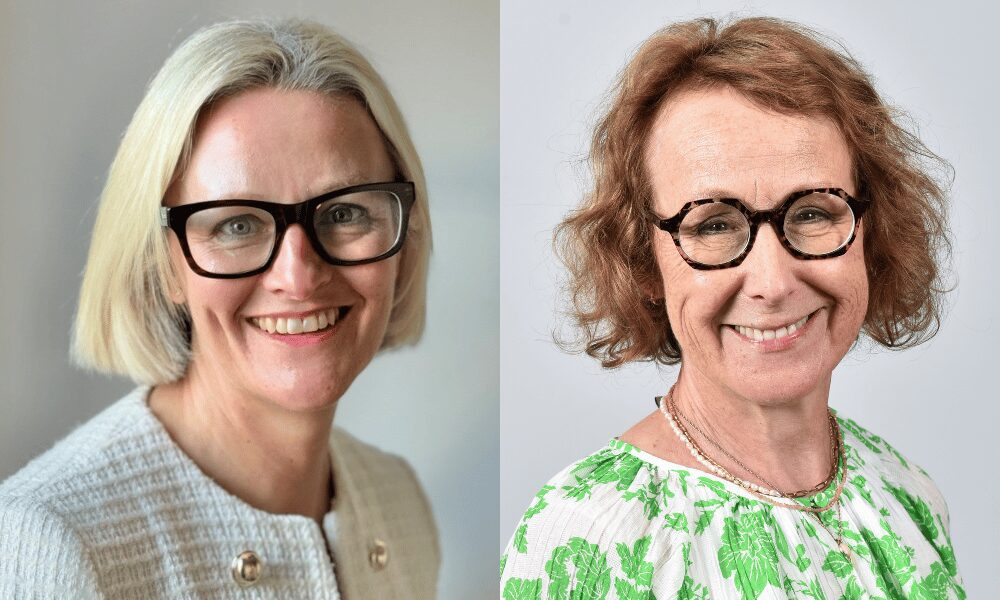
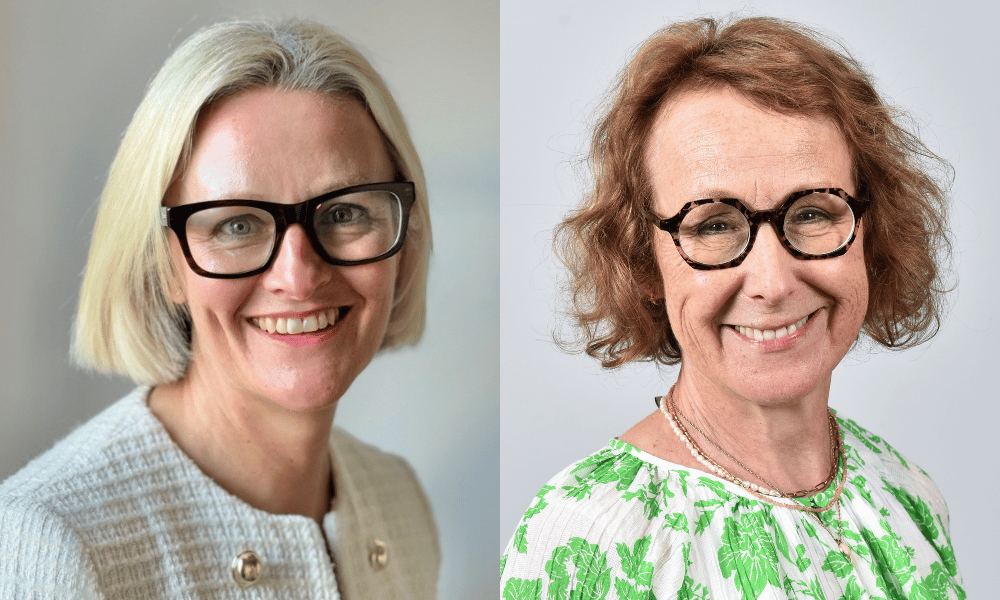
Katherine Conway (pictured on the right), head of inclusion at Aon, and Jen Denby (pictured on the left), global head of inclusion & diversity at WTW, both long-time participants in Dive In, said the industry has changed substantially since the festival began 12 years ago. Conversations that once centred heavily on gender and the basic business case for diversity have widened to include mental health, fertility, menopause, domestic abuse, disability and neurodiversity.

“I think the way we’ve tackled the difficult topics is something that I’ve been really proud of, really opening conversations and opening mindsets to what you can talk about in the workplace and what’s important,” Conway said. “It’s completely different talking to people around this work and its importance than it was 12 years ago.”

Denby said culture is now “recognised as a business priority in its own right, not simply a people initiative that runs on the side.”

Insurance still has a talent perception problem

While both executives acknowledged progress, they said the shift in perspective on diversity and inclusion (DEI) also has direct implications for brokerages competing for talent. Insurance still faces a persistent perception problem among younger workers, even as graduate and apprenticeship programmes have expanded.

“Insurance doesn’t have the visibility with young people that other sectors do,” Denby said. “I’m still surprised when I hear people talk about their journeys and why they joined insurance. So many people stumble into insurance.”

Conway said the industry still “feels a bit of a secret,” despite the breadth of careers available across insurance and risk management. Aon has sought to reach potential recruits earlier, including through a programme for 16- and 17-year-olds, while the wider sector has placed greater emphasis on apprenticeships and alternative entry routes.

AI puts recruitment processes under scrutiny

The next challenge is what happens once technology becomes more deeply embedded in those talent processes. AI is the theme of Dive In’s final festival, which from runs September 22 to 24.

Conway warned that firms chasing efficiency in recruitment could inadvertently exclude qualified candidates if automated screening is allowed to operate without sufficient oversight. “With screening, you’ve got to make sure that you’re not just using AI to screen because you could cut out a whole swathe of the population, no matter what that is,” she said.

Employers, she added, should continue to examine who enters the recruitment funnel, who progresses and what the eventual hiring cohort looks like, rather than assuming an automated process is neutral.

Denby similarly argued that “talent decisions are made by people,” with transparency around how AI is being used likely to become increasingly important for employee trust. “There also needs to be regular auditing of output and the data behind that, looking at whether there’s bias,” she said. “If a system is built and it’s inherently just using data from the past, is that actually going to help us and give us the information to make decisions going forward?”

Could AI widen access to insurance careers?

The technology could also help brokerages widen access to career development. Denby pointed to real-time translation, AI coaching and tools that can help employees prepare for difficult conversations or improve communication. However, she warned that unequal access to those tools could itself create a new divide inside organisations.

For Conway, skills-based AI tools could also identify the skills needed for a role, map gaps and recommend training or mentoring. “We’re looking at the skills that individuals have and then helping them build the skills for the career development that they need. (The AI tool) asks you, ‘You’ve got these skills, but what skills do you want to build? Where do you want to go? What’s the next role that you’re looking for?’ Then it will help you identify the skills gaps.

“You can drive and own your future potential. You can really invest in your career. I think that’s fantastic for inclusion.”

The executives also argued that the industry’s digital transformation makes diversity of human expertise even more salient. “It’s more essential than ever that we are bringing in different perspectives, people who think differently and people from different backgrounds because of the way that we’re transforming,” Conway added. “The skills that we need now are very different to the skills we needed back then, and actually widening talent pools is important.”

Progress remains uneven

Despite the cultural changes of the past 12 years, both executives said inclusion remains unfinished work. Denby singled out disability inclusion and accessibility as a space for opportunity. ” Too many talented neurodivergent people still find our recruitment processes or our workplace processes harder to navigate than they should. So, there’s a gap there that we need to work on,” she said. “But looking ahead, this isn’t work that has a fixed destination, in my view. It’ll never be done.”

Conway also argued that some changes will only become visible over a longer period as more diverse early-career cohorts move into senior roles. “You’re not just running a few programmes,” she said. “You’re actually systemically changing the way we hire, the way we retain talent and the way we develop talent.”

Source

Berkshire completes Buffett succession with Howard named chairman

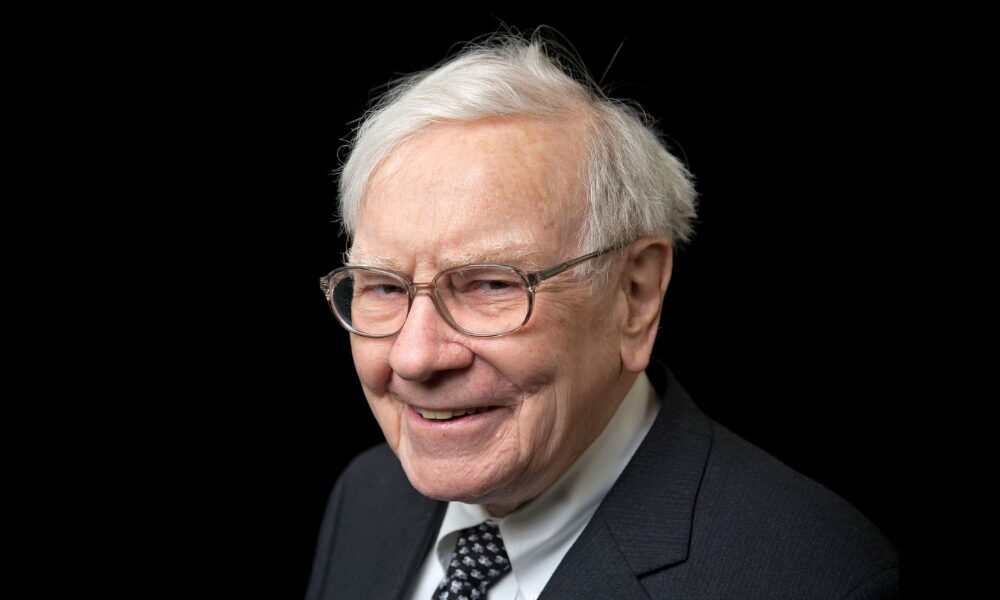
Berkshire Hathaway has named Warren Buffett chairman emeritus and elected his son Howard G. Buffett as chairman of the board, completing a multi-year succession structure.

Buffett, who turned 96 in August, remains a director and will keep offering “his valued judgment and perspective,” the company said, while Howard Buffett, a Berkshire director since 1993, steps into the chairman role.

“Greg runs the company; Howard will guard its culture and values – both worth more than anything on our balance sheet,” Buffett wrote to shareholders. “Think of Howard as a policy the shareholders own and hope never to claim against.”

Susan Decker continues as Lead Independent Director. Greg Abel, who formally became president and CEO on January 1 following a unanimous board decision in 2025, called Warren’s impact “without parallel in the history of American business” and said Howard would be the guardian of the culture Warren built.

Ajit Jain remains vice chairman of insurance operations, continuing to oversee GEICO, Berkshire Hathaway Reinsurance Group and Berkshire Hathaway Primary Group, a combined float of roughly US$176.9 billion as of the first quarter of 2026 that makes Berkshire one of the most consequential counterparties in global re/insurance markets.

Charlie Shamieh, currently chairman of Gen Re, has already been named as Jain’s eventual successor, though no retirement date has been set.

Berkshire’s insurance footprint spans GEICO, Berkshire Hathaway Primary Group and Berkshire Hathaway Reinsurance Group, alongside businesses including Berkshire Hathaway Specialty Insurance, General Re, MedPro Group, Berkshire Hathaway GUARD and USLI.  

The leadership transition comes as Berkshire’s insurance float stood at approximately US$177.5 billion at June 30, up US$1.1 billion from the end of 2025. Berkshire said its combined insurance operations generated pre-tax underwriting profits during the first half of the year, meaning the average cost of that float remained negative.

In the second quarter alone, GEICO, Berkshire Hathaway Primary Group and Berkshire Hathaway Reinsurance Group generated US$2.18 billion of pre-tax underwriting earnings on US$22.48 billion of earned premiums. BHRG contributed US$913 million of that underwriting profit, while Berkshire Hathaway Primary Group contributed US$273 million.

Source

Risk presentation — not price haggling — drives renewal outcomes, Everywhen says

Businesses approaching renewal should stop asking simply how to bring the price down and start asking how to become a better risk, according to Everywhen.

With UK businesses facing continued pressure from employment costs, business rates, energy bills and wider operating expenses, the insurer and risk advisory group says reducing premiums understandably becomes a priority, but warns that an excessive focus on price can cause businesses to overlook the single biggest factor shaping their insurance outcome: how their risk is understood, managed and presented to insurers in the first place.

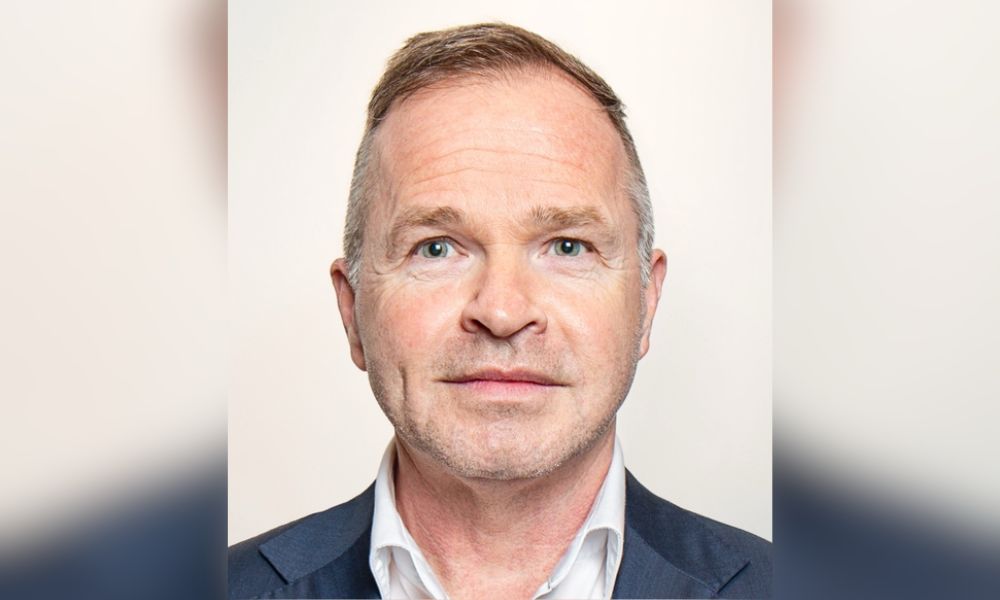
Chris Brady (pictured), chief executive of corporate, international and risk advisory services at Everywhen, said the businesses that consistently achieve the best insurance outcomes aren’t necessarily those focused exclusively on negotiating the lowest premium, but those focused on becoming a better risk. He said insurers aren’t looking for perfect businesses, but for businesses that understand their risks, manage them effectively, and can demonstrate they’re taking the right actions to protect what matters most.

Two examples of risk being presented differently

Everywhen said the growing complexity of cyber threats, supply-chain disruption and business interruption means insurers are placing significant emphasis on resilience, risk governance and the controls a business has in place. The firm pointed to two cases where improving how risk was understood and presented, alongside relatively simple risk-management measures, helped secure cover that had previously been difficult or impossible to obtain: a sawmill and timber products manufacturer that had been unable to secure property and business interruption cover, and an online retailer struggling to obtain cyber insurance.

In both cases, Everywhen said it worked to identify and articulate controls the businesses already had in place, alongside introducing relatively low-cost improvements, rather than making radical changes to either business, which allowed the underlying risk to be presented differently to insurers.

Brady said he has seen clients achieve premium reductions of between 20% and 50% once a strong, translatable risk-management approach and story is built alongside improvements in coverage and insurer engagement. But he said those savings are typically a by-product rather than the objective, with the primary purpose of risk management being to build a stronger, more resilient business that protects its brand, balance sheet, cash flow, assets and people.

The case against waiting for the renewal notice

Everywhen argues one of the biggest mistakes businesses make is treating risk management as something to think about only once renewal approaches. Cyber resilience, business interruption planning, fleet risk, flood preparedness and health and safety can all shape the overall picture an insurer sees, and Brady said risk management doesn’t start at renewal, since waiting until that point may already limit how much a business can actually influence the outcome.

He said the strongest businesses take a year-round approach, regularly reviewing vulnerabilities, strengthening controls and building a clear, ongoing picture of how their risks are managed. Quality, detailed and focused risk-management information, he said, gives insurers the evidence to underwrite positively, and demonstrating that risks have been identified, considered, managed and mitigated gives insurers greater confidence when setting terms, capacity and pricing.

Everywhen said businesses approaching their next renewal should reframe the question they’re asking, moving from “how do we reduce our insurance premium?” to “how do we increase insurer confidence in our business?”

The wider read

The argument Everywhen is making here isn’t new in principle, brokers and risk advisers have long said that presenting risk well matters as much as shopping the market, but the framing is notably direct in treating price negotiation and risk management as competing priorities rather than complementary ones.

Everywhen itself is the rebranded successor to Towergate, giving this advice some weight from a business with direct visibility into how commercial renewals actually play out across a large book of UK clients.

Whether businesses take up the year-round approach Brady describes probably depends less on the logic of the argument, which is straightforward, and more on whether smaller and mid-sized businesses have the internal capacity to treat risk management as a continuous discipline rather than an annual scramble ahead of a renewal date.

Source

Most consumers can’t verify AI financial advice – and nearly one in five has paid for it

Eight in 10 UK consumers now use an AI assistant at least three times a week, and six in 10 use one to help make decisions – a shift that is already reshaping how people choose financial products. Research presented at Defaqto’s 2026 Data of Record conference found that more people now turn to AI-powered tools than to a provider or financial adviser when making those choices.

The numbers sit alongside a trust deficit that has not kept pace with adoption. One in five consumers actively distrust AI tools when choosing a financial product. Nearly one in five have already acted, or almost acted, on AI guidance that later turned out to be wrong.

Most striking is that 62% of consumers say they cannot judge whether AI guidance is accurate. A client who cannot evaluate that guidance cannot self-correct when it fails. The research, carried out by Savanta on behalf of Defaqto, suggests a substantial share of the market is making product decisions in exactly that position.

Data quality is the hidden variable

Mike Piddock, managing director and interim CEO at Defacqto, told delegates that greater reliance on AI increases rather than reduces the importance of data quality. Firms need confidence in where data has come from, how it has been structured, and whether it gives a broad enough view of the market.

Defaqto has a commercial interest in that argument – its Star Ratings business depends on independently verified data. But the point carries more weight beyond the conference room than it might at first appear: AI outputs are only as reliable as the information they draw on, and consumers have no direct way to assess either.

Alex Ward-Booth, director at Savanta, compared the challenge to the California Gold Rush. Success there depended on distinguishing genuine gold from fool’s gold, and those who could not tell the difference lost their stake.

The human connection question

Keynote speaker Emma Boardwell, founder of Emotional Finance, argued that firms will need to “zig towards speed, efficiency, automation and AI in order to compete” while also “zagging towards human connection in order to differentiate and matter.”

That framing maps onto what insurance-specific research has been showing. The 2026 Guidewire European Insurance Consumer Survey found that only 30% of UK consumers are comfortable with AI making decisions about their insurance policy price. The three conditions consumers attach to any AI acceptance in insurance are human intervention, transparency, and independent regulation.

Those conditions describe what brokers already provide. A broker-assisted client has a named professional accountable for the advice, access to a broad market view, and a human to call when something goes wrong. A growing share of clients who turn to AI instead are getting none of those things, and many discover that only after the fact.

The Chartered Insurance Institute’s July 2024 Public Trust Index found that broker-assisted consumers report better insurance outcomes than those using price comparison sites or going direct, including on claims speed. As AI tools become a more common first stop for insurance decisions, that gap in outcomes is likely to widen before it narrows.

Source

Summer heat adds to a pothole claims problem already getting worse

Liability is rarely resolved cleanly

The insurance dimension extends beyond the motor book. Emma Fuller, partner at DAC Beachcroft and member of the Forum of Insurance Lawyers (FOIL) motor sector focus team, said the liability chain on pothole-related damage is rarely straightforward. “Drivers are expected to take reasonable care and adapt their driving to road conditions, while local authorities have a duty to maintain the public highway,” she said. “Whether a local authority is liable will often depend on what it knew, or ought reasonably to have known, about a defect and the adequacy of its inspection and maintenance regime.”

Source

IUA rebrand arrives as Jones reshapes leadership and claims focus

Chris Jones became IUA chief executive on May 1, 2025 and succeeded Dave Matcham, who retired after 20 years leading the organisation. Since taking over, Jones has restructured the IUA’s senior leadership, overhauled its approach to claims, and launched a talent programme that directly impacts the practitioners who will be processing and negotiating claims on behalf of London company market members for the next three decades.

Source

Silicon Valley’s AI ‘extinction’ panic lands on a market that’s already nervous about the risk

The London market has been building its own guardrails too. The Lloyd’s Market Association, working with Barnett Waddingham, has published an AI Adoption Toolkit to help managing agents build governance frameworks as AI moves from pilot projects into core underwriting, reserving and claims work. Sanjiv Sharma, the LMA’s head of actuarial and exposure management, said the market’s focus is now shifting toward how AI “is implemented and governed in practice,” rather than whether to adopt it at all. On the composite side, the ABI’s AI guide sets out five principles; accountability, transparency, fairness, safety, and contestability and redress  that member firms are expected to apply. 

Source

Lloyd’s lobbies for delay as UK’s ban on insuring Russian LNG tankers approaches

NorthStandard, the world’s second-largest P&I club following its 2023 merger with the Standard Club, continues to insure the Clean Planet, Clean Ocean and Clean Vision. The three vessels, owned by Greek shipping group Dynagas, were added to the UK’s Russia sanctions list in October 2025. They remain among the only EU-owned ships still serving Russia’s Yamal LNG plant in the Arctic, which has kept exporting large volumes of gas throughout the war.

Source

contact us